A salesperson quotes you "$2.80 per watt." A neighbor paid "$3.20 per watt." Another installer says their panels are "only $0.95 per watt." Same metric, wildly different numbers — and most homeowners have no idea which figure they're even being quoted. Cost per watt is the solar industry's universal measuring stick, and if you don't understand it, you're negotiating blind.
- Panels alone cost $0.70–$1.50/W depending on brand and technology.
- Fully installed systems run $2.50–$3.50/W in 2026 after labor, inverter, and permits.
- To calculate your total: multiply system watts × $/W rate. A 7kW system at $3.00/W = $21,000 before incentives.
- Brand matters: SunPower costs more per watt but delivers more per square foot over 25 years.
- The 30% federal tax credit applies to the fully installed cost — not panel cost alone.
Panel Cost vs. Installed Cost — Two Very Different Numbers
Here's where most people get confused: there are actually two cost-per-watt figures floating around, and confusing them can throw your budget off by tens of thousands of dollars.
Panel-only cost per watt is what you'd pay buying panels wholesale or direct — typically $0.70 to $1.50 per watt in 2026. That's just the glass, cells, and frame sitting on a pallet.
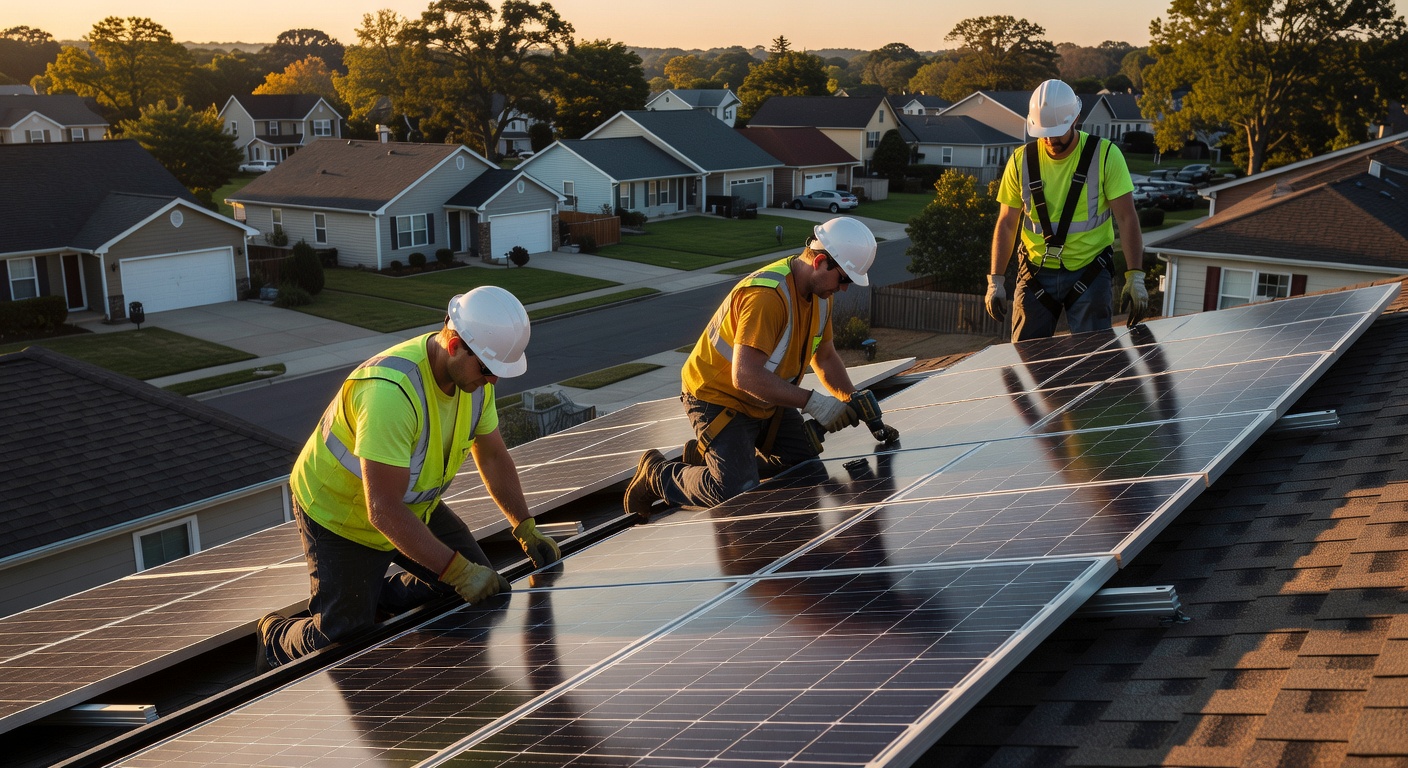
Fully installed cost per watt is what actually matters for your budget. This number — typically $2.50 to $3.50/W — includes inverters, racking hardware, wiring, labor, permits, and utility interconnection fees. That's the figure your installer quotes you, and it's the one you should use for every calculation.
The Calculation Nobody Actually Shows You
Most articles mention "multiply kilowatts by cost per watt" and move on. That's not enough. Here's a real-number walkthrough.
Say your home uses 900 kWh per month. You need roughly a 7,000-watt (7kW) system in most US climates. Your installer quotes $3.10/W fully installed. Here's the math:
7,000W × $3.10/W = $21,700 gross cost
Federal tax credit (30%): −$6,510
Net cost after ITC: ~$15,190
That's a system powering the average American home for 25+ years. Compare that against what you currently spend on electricity — most homeowners pay off solar in 7–10 years even at $3.00/W installed. Use the TrySolar cost simulator to plug in your own numbers and actual local rates.
"The cost per watt number is useless without knowing whether it includes installation. Always ask your installer: is this the all-in price?"
Brand Comparison: What You Get Per Dollar in 2026
Brand matters more than most buyers realize — not because of marketing, but because efficiency and degradation rates directly affect how much electricity you generate over 25 years. A "cheap" panel that degrades faster can cost you more in the long run.
| Brand | Panel $/W | Efficiency | Warranty | Best For |
|---|---|---|---|---|
| SunPower | $1.20–$1.50 | 22–24% | 25 yr comprehensive | Small roofs, max output |
| REC Group | $1.00–$1.30 | 21–22% | 25 yr product + perf | Premium value balance |
| Canadian Solar | $0.85–$1.10 | 20–21% | 12 yr product / 25 yr perf | Mid-range residential |
| JinkoSolar | $0.75–$0.95 | 20–22% | 12 yr product / 25 yr perf | Budget-conscious buyers |
| Trina Solar | $0.75–$0.95 | 19–21% | 10 yr product / 25 yr perf | Commercial installs |
Real talk: if a contractor is pushing hard on a brand you've never heard of at $0.65/W, ask for the degradation spec. Panels rated at 0.8% annual degradation instead of the industry-standard 0.5% will produce 7.5% less power by year 15. That loss compounds.
Monocrystalline, Polycrystalline, Thin-Film — Does the Type Change the Price?
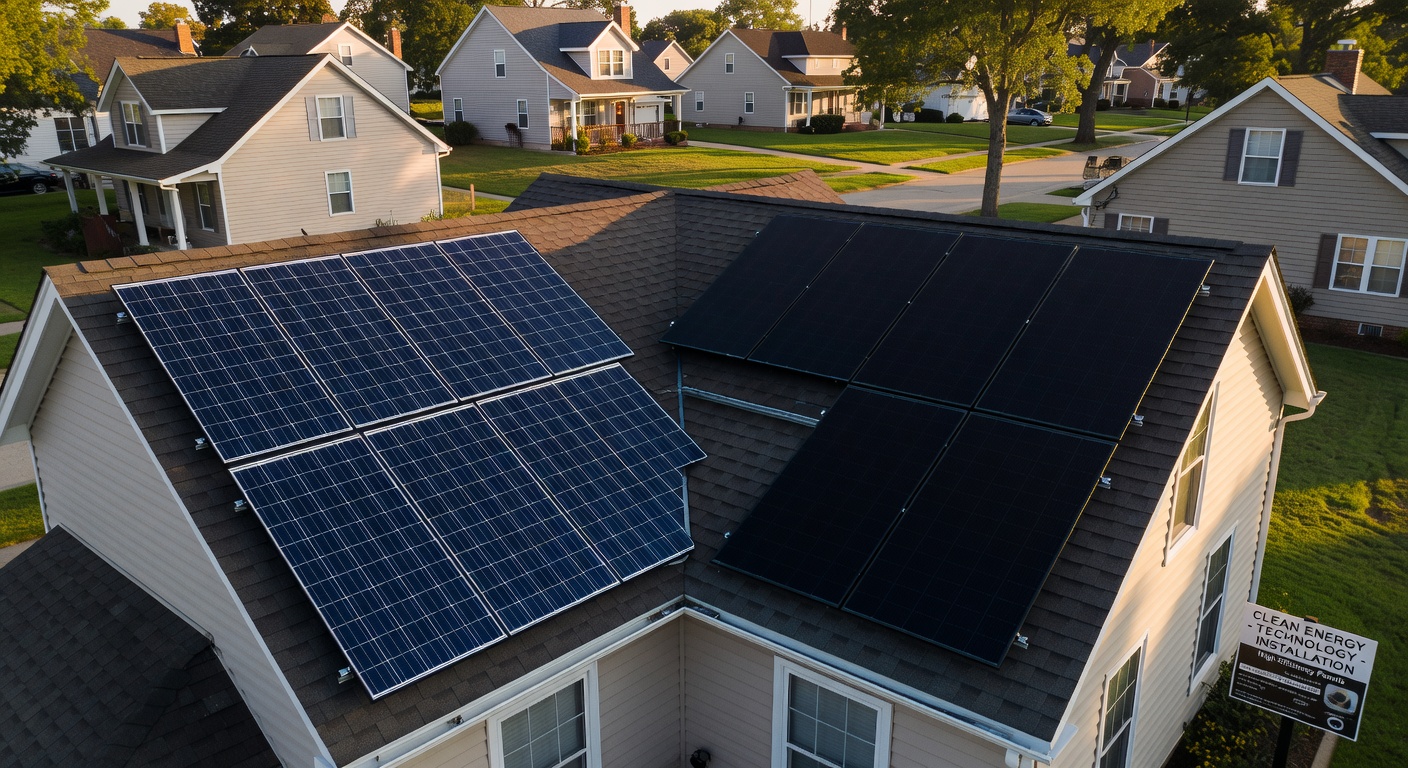
Yes, significantly. The cell technology behind a panel determines both its price per watt and its real-world output.
$0.90–$1.50/W panel cost. Highest efficiency (19–24%). Best for limited roof space. Handles shade better. This is what most residential installers now default to.
$0.70–$1.00/W panel cost. Lower efficiency (15–17%). Requires more roof space for same output. Largely being phased out of new residential installations.
Thin-film panels (like CadTel or CIGS) run $0.50–$0.80/W but at only 10–13% efficiency — they need significantly more space. They're primarily used in large commercial and utility-scale projects, not residential rooftops.
💡 Did You Know? Monocrystalline panels now account for over 85% of US residential solar installations. The price gap with poly has narrowed so much that paying slightly more per watt for mono almost always makes financial sense over a 25-year system life.
Residential vs. Commercial: Why the Rate Changes
Commercial systems are bigger — and bigger means cheaper per watt. A 500kW commercial install might come in at $1.80–$2.20/W fully installed, while a residential 8kW system costs $2.60–$3.50/W. Same reason a contractor charges less per square foot for a 5,000 sq ft job than a 500 sq ft job.
Jake, a restaurant owner in Phoenix, got a quote for a 40kW rooftop system at $2.10/W — $84,000 before incentives and accelerated depreciation. His neighbor's 8kW home system came in at $3.00/W. Per watt, Jake's restaurant paid 30% less. If you own commercial property, don't accept residential pricing.
Regional Price Variations You Need to Know
Where you live matters enormously. Labor costs, permit fees, and local installer competition all push the number up or down.
| Region | Avg. Installed $/W | Notes |
|---|---|---|
| California | $3.10–$3.80 | High labor costs, but strong incentives |
| Texas | $2.50–$3.10 | Competitive market, lower labor |
| Florida | $2.60–$3.20 | Dense installer network keeps prices fair |
| Northeast (NY, MA) | $3.20–$4.00 | Highest installed costs in the US |
| Midwest | $2.70–$3.30 | Mid-range; fewer installers in rural areas |
Why Cheaper Per Watt Can Actually Cost You More

Honestly, this is the mistake we see most often. Buyers zero in on the lowest $/W quote without checking what they're actually getting. Three things make cheap panels expensive over time.
Key Things Cheap $/W Can Hide:
- Higher degradation rate — 0.8%/yr vs 0.5%/yr means ~7% less power by year 15
- Weaker product warranty — 10-year vs 25-year means panel replacement comes out of your pocket
- Lower efficiency — same $/W price, but you need more panels (and more roof space) for the same output
See the full solar cost breakdown guide for a complete look at what drives total system pricing beyond the panel cost itself.
A good installed price per watt in 2026 is $2.70–$3.20/W for residential — anything under $2.50 warrants scrutiny, anything over $3.80 needs justification. For panels alone, expect $0.80–$1.20/W for quality monocrystalline. Always compare quotes on the same system size and specifications, not just the $/W headline number. And factor in the 30% federal ITC — it applies to the full installed cost, making your real out-of-pocket substantially lower.
Frequently Asked Questions
What is a good price per watt for solar panels in 2026?
For fully installed residential solar, $2.70–$3.20/W is a competitive rate in most US markets. If you're getting panel-only quotes, $0.85–$1.10/W for quality monocrystalline panels is reasonable. Anything significantly below these ranges should prompt questions about equipment quality and warranty terms.
How do I calculate my total solar system cost from a $/W rate?
Multiply your system size in watts by the installed $/W rate. A 8,000W (8kW) system at $3.00/W costs $24,000 gross. Apply the 30% federal tax credit and your net cost drops to $16,800. Use the TrySolar simulator for a more precise estimate using your local rates and incentives.
Why is SunPower so much more expensive per watt than JinkoSolar?
SunPower's premium pricing reflects genuinely higher cell efficiency (22–24% vs 20–22%) and a best-in-industry 25-year comprehensive warranty covering both product and performance. For homeowners with limited roof space or who plan to stay in the property long-term, the higher $/W often delivers better lifetime value despite the upfront cost.
Does the federal tax credit apply to the cost per watt I'm quoted?
Yes — the 30% Investment Tax Credit applies to your total installed system cost. If your installer quotes $3.00/W for a 7kW system ($21,000), your ITC is $6,300, bringing net cost to $14,700. The credit applies to the all-in installed price, not just the panel cost component.
Is cost per watt different for commercial solar installations?
Commercial systems consistently come in at lower $/W rates — typically $1.80–$2.50/W installed — due to economies of scale. A 200kW commercial rooftop gets volume pricing on equipment and spreads labor/permitting costs across far more panels. Commercial projects also qualify for accelerated MACRS depreciation on top of the ITC, which dramatically changes the ROI math.
See What Solar Actually Costs for Your Home
Plug in your address and monthly bill — get a real cost-per-watt estimate based on your roof, local rates, and current installer pricing.
Calculate My Solar Cost →